Home › Industrial and Heavy-Duty Asphalt Paving
Handle heavy traffic with confidence using industrial asphalt paving in Lubbock, TX. We design and build pavements for truck yards, loading docks, and equipment areas with proper thickness and base. Our solutions are tailored to axle loads and turning patterns to reduce rutting and failures. Schedule a consultation to engineer the right pavement for your operation.
Precision Asphalt Lubbock provides professional industrial asphalt paving throughout Lubbock, TX, Texas and the surrounding area. Our licensed, insured crew delivers safe, clean, on-time work with a free estimate before anything begins. Call (806) 230-5982 or request your free quote.
Industrial Asphalt Paving Built for Real-World Loads
Industrial and heavy-duty asphalt paving is not the same as paving a parking lot. At Precision Asphalt Lubbock, we treat these projects as structural work, because they carry forklifts, loaded semis, farm equipment, cranes, and stacked inventory every day. If the design is off by even a small margin, you end up with rutting, base failure, and shutdowns for emergency repairs.
For industrial asphalt paving in Lubbock, we start with how your site actually works. We look at traffic patterns, axle loads, turning movements, and where trucks stop and idle. A loading dock throat will need a different design than a low-traffic storage yard. We design the asphalt thickness, base depth, and mix type to match the heaviest use, not the average use, so you are not replacing pavement every few years.
Our team also factors in West Texas soil and weather. Many industrial sites around Lubbock sit on expansive or sandy subgrade that will shift if not handled correctly. Combined with high summer heat and temperature swings, this can destroy an under-built pavement. Precision Asphalt Lubbock builds each layer to hold up in this environment, not just to meet a generic spec.
How We Design Industrial Pavement for Heavy Loads
The most important step happens before any asphalt goes down. For industrial asphalt paving, we begin with a site assessment and pavement design, not a price out of a book. We identify soil type, existing base conditions, drainage paths, and any previous failures. If we see repeat cracking in the same lane or loading bay, we investigate why before we propose a fix.
We then size the structure layer by layer. On many Lubbock industrial sites, a typical section might be 8 to 12 inches of compacted base under 3 to 6 inches of asphalt, but we do not guess. We adjust thickness based on your truck counts, anticipated loads, and whether heavy equipment will turn sharply or track in straight lines. High-stress areas like dumpster pads, fuel islands, and dock approaches often get thicker sections or stiffer mixes.
Mix selection also matters. For heavy-duty work, we specify industrial-grade hot mix with higher stability and resistance to rutting. In some applications, we recommend a binder course with a coarser aggregate under a tighter surface course. This combination handles the structural load from the bottom and keeps a smoother, sealable top layer for the long term.
Construction Process Step by Step
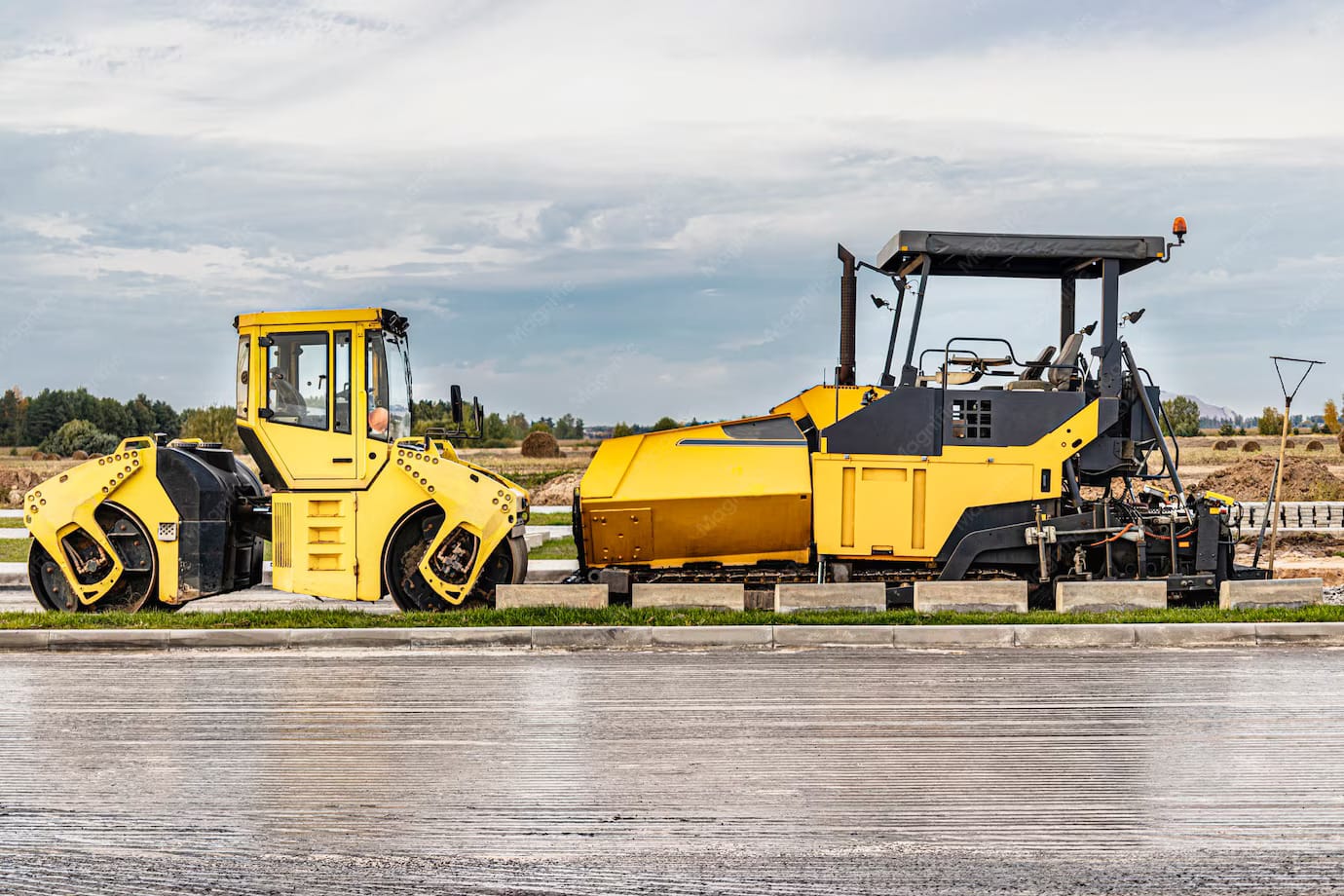
Industrial asphalt paving only performs well if each step in construction is handled correctly. Precision Asphalt Lubbock follows a consistent field process so you get the design performance you are paying for.
1) Subgrade and proof rolling: We strip soft spots, organics, and old unsuitable material, then proof roll with loaded equipment. Any pumping or deflection is corrected with undercut and replacement, not just covered up.
2) Base installation: We place and compact a crushed base aggregate, usually a caliche or limestone blend that performs well in Lubbock. We place base in lifts, typically 4 inches at a time, and compact to specified density. We check grades to ensure water will run off and not pond under the pavement.
3) Fine grading and tack: Once base is tight and dry, we fine grade and compact the surface again, then apply a tack coat that bonds new asphalt layers to each other and to existing pavements.
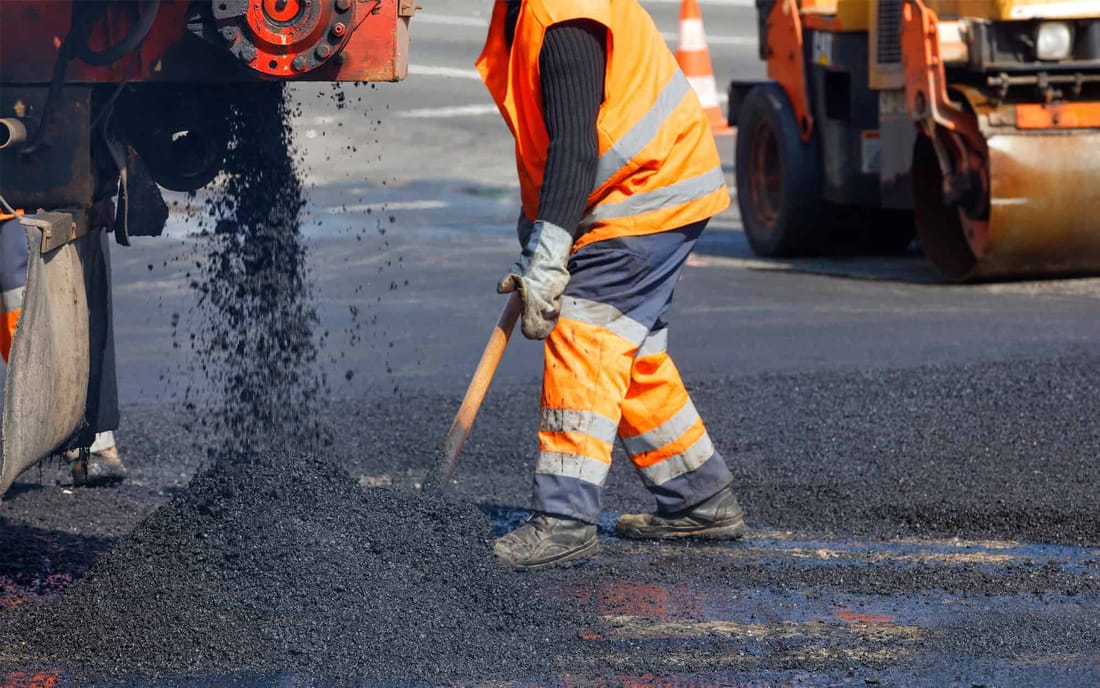
4) Asphalt placement in lifts: For heavy-duty sections, we normally install at least two asphalt lifts, a base or binder course, then a surface course. Each lift is spread at the specified compacted thickness, rolled while within the correct temperature window, and checked for joints and smoothness.
5) Transitions and joints: Industrial yards often tie into concrete at docks, drains, and building aprons. We shape these transitions so there are no vertical bumps that get pounded by forklifts or truck tandems, and we seal joints where appropriate to reduce water entry.
6) Final compaction and striping: We finish compaction to target density, then, once the surface cools and cures, we can lay out lanes, truck paths, and restricted zones if needed.
Local Conditions in Lubbock That Affect Your Pavement
Lubbock’s climate and soils directly influence how industrial asphalt paving should be done. Hot summers can soften under-designed asphalt, especially where trucks stop and turn, which leads to ruts and shoving. We counter this by specifying mixes that perform in high surface temperatures and by ensuring enough structure under those high-stress zones.
Wind-driven dust and dirt are another local factor. Fine material that sits on the surface can trap moisture and promote stripping in the top layer. Precision Asphalt Lubbock emphasizes surface drainage and recommends periodic sweeping for industrial yards, especially around grain facilities, cotton warehouses, and agricultural operations.
Soils in and around Lubbock often include caliche and expansive clays. If we see high plasticity clays during our evaluation, we may recommend undercut with replacement base, cement treatment, or geogrid reinforcement in localized areas. It is cheaper to address a problem subgrade once than to keep patching failures that were baked into the original build.
Timing also matters. For large industrial projects, we typically advise scheduling heavy paving work in spring or fall, when temperatures are stable and compaction windows are easier to manage. In mid-summer, we plan early morning or evening work to keep asphalt in the right temperature range. During the colder months, there are more limits on paving thickness per lift and working hours, which we will discuss with you during planning.
What Drives Cost and How to Control It
Industrial asphalt paving is an investment, and most of the cost is in the structure you cannot see once it is finished. The major cost drivers are total pavement thickness, base depth and quality, subgrade corrections, and project phasing. Haul distances for materials and site access also affect pricing.
For example, a lightly used truck access lane may only need a modest base increase over a standard commercial lot, while a high-volume loading dock area might require significantly thicker sections and extra base preparation. By matching pavement design to the actual load conditions, Precision Asphalt Lubbock can avoid overbuilding low-stress areas and focus your budget where the pavement really takes a beating.
Existing conditions can either save or cost you money. If your current base is solid and thick, we might mill off only the top asphalt and rebuild from there. If the base is contaminated with fines or was never compacted properly, it can be more cost-effective to remove and replace than to keep patching. We will show you options with pros and cons instead of a single take-it-or-leave-it quote.
Phasing is another tool. Industrial sites often cannot shut down completely. We can divide the project into sections so certain docks, lanes, or yard areas stay open while others are rebuilt. This sometimes stretches the calendar but can significantly reduce downtime and the need for temporary facilities.
How Precision Asphalt Lubbock Keeps Heavy-Duty Pavement Performing
A well-built industrial asphalt pavement should not be a constant headache. Our goal is to deliver a structure that can be maintained predictably instead of repaired reactively. During planning, we talk through maintenance expectations so you know what to budget for in years 3, 5, and 10.
We often recommend a maintenance plan that includes scheduled inspections, crack sealing in high-stress areas, and surface sealing where appropriate. In heavy-use facilities, catching early cracking along wheel paths or at dock approaches can prevent water from reaching the base and causing larger failures. We can also add localized reinforcements or overlays if your operations change and loads increase over time.
Precision Asphalt Lubbock works with manufacturing plants, distribution centers, agricultural processors, oilfield service yards, and municipal facilities across the Lubbock area. For each, we document the pavement structure we install, so when you call us years later, we know exactly what is under the surface before we recommend any changes.
If you are planning new construction, expanding an existing yard, or dealing with repeated failures in specific areas, we can start with a site walk and a straightforward discussion of what it will take to fix it for the long term. No generic templates, just a pavement design and construction plan that fits the way your operation uses the ground every day.